
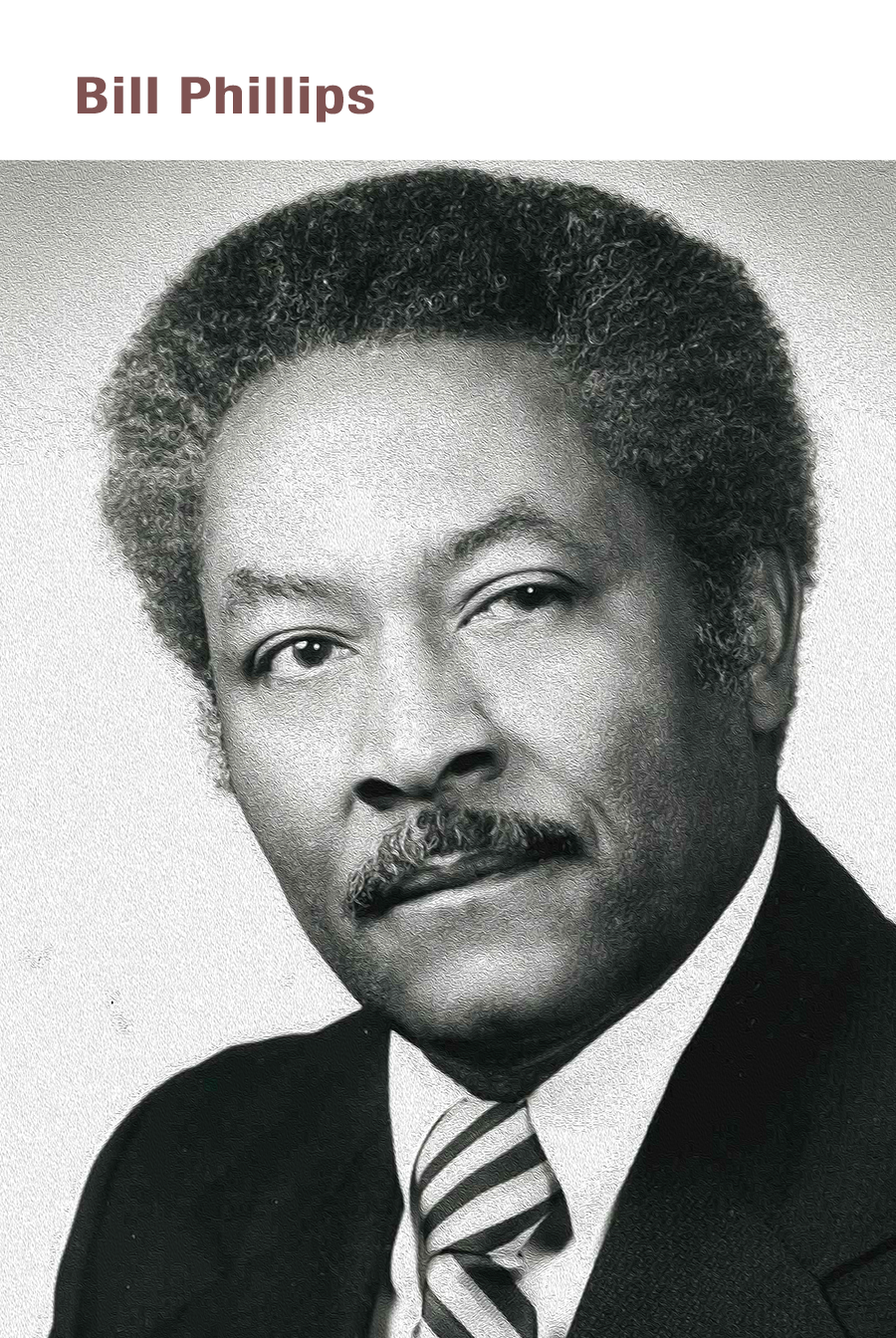
Bill Phillips
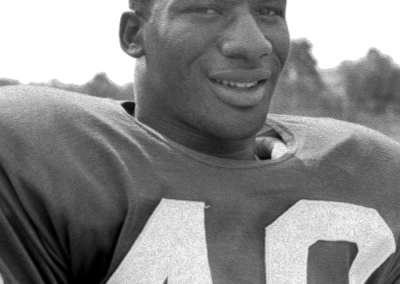
Bill Phillips (July 16, 1925, to October 27, 2012) stands as one of the city’s most important civic trailblazers, remembered not only for the offices he held but for the hope and opportunity he created for others.
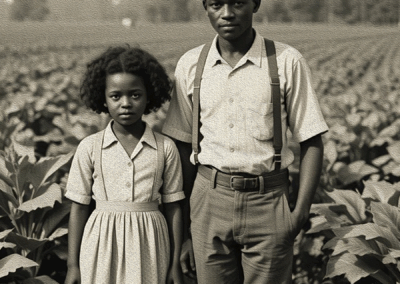
William Oliver “Bill” Phillips grew up in a city that was itself evolving, shaped by the railroads, the band instrument industry, and waves of new families seeking a better life. He was the grandson of Jack Terry, an African American farmer from Tennessee who moved his family to Elkhart in 1923 at his daughter Annie’s request, trading the Jim Crow South for the hope of Northern opportunity. That act of courage and sacrifice set the stage for Bill’s own journey: a young man raised with an ethic of hard work, dignity, and service to others.
He served his country in the U.S. Navy during World War II, gaining both discipline and a broader perspective on the world beyond Elkhart. When he returned home, he chose not to leave Elkhart behind but to invest his life in making the city better, especially for those who had long been left out of power and influence.
In 1963, at a time when the Civil Rights Movement was challenging segregation and discrimination across the country, Bill made history as the first Black member of the Elkhart City Council. It signaled that Black residents of Elkhart would finally have a voice at the table where decisions were made about streets, schools, safety, and opportunity.
His approach to public office reflected respectability, reciprocity, and responsibility to the community. He worked to bridge divides rather than deepen them.
Bill built a career that crossed sectors, from transportation to finance, always carrying his sense of duty into whatever role he held. He became Elkhart’s first airport manager, helping oversee a key gateway for business and travel in a city increasingly connected to national and global markets. Later, he entered banking and rose to become the first Black president of a local bank, shattering another barrier in a field where executives rarely reflected the diversity of the communities they served.
In banking, Bill’s influence was especially significant for working families and small business owners who needed fair treatment and a trusted advocate. By occupying a leadership role in finance, he helped open doors to credit, home ownership, and entrepreneurship for people who had often been overlooked.
Beyond his professional roles, Bill served on the boards of multiple nonprofit organizations, lending his experience, credibility, and steady judgment to causes that strengthened Elkhart. He was active with groups such as the NAACP, the Elkhart Jaycees, and a range of community and service organizations, demonstrating that leadership is not confined to titles but lives in everyday commitments. Through these efforts, he helped shape a culture of collaboration between business, government, and nonprofits in the city.
When Bill Phillips died, at the age of 87, Elkhart responded with a tribute rarely seen for a local citizen. His visitation and funeral services were held at the Lerner Theatre and he became the only person known to have lain in state there, an honor reserved for heads of state or figures of extraordinary public significance. For many in the community, filing past his casket in the Lerner was both a farewell and a public acknowledgment that Bill was, in every sense, a city hero.
Bill often spoke of his grandfather Jack Terry’s decision to move the family to Elkhart as a defining moment of courage and hope. That hope, rooted in a belief that hard work in a fairer place could change the trajectory of a family, is woven through every chapter of Bill’s life—from his Navy service to his election to the council, from the airport to the bank, and from nonprofit boardrooms to the stage of the Lerner.
Today, conversations about honoring Elkhart’s Black pioneers often place Bill Phillips alongside his grandfather and other community builders as symbols of what it means to invest in the future. Whether through proposed statues, awards, or scholarships, his name is invoked not only to remember what he achieved but to inspire similar courage, generosity, and leadership in those who follow. In the story of Elkhart, Bill Phillips is more than a list of firsts; he is a living legacy of hope fulfilled and responsibility embraced.
What will YOU do?
Do not just look at what others have done. They were second-graders at one time, teenagers. They were regular people who decided to be courageous. We all have that choice.
AI-generated portrayal. This video uses AI to recreate the likeness/voice of Bill Phillips for tribute purposes. Not an actual recording.
Honoring Our Heritage
Celebrating African American excellence in Elkhart, IN, is more than a tribute; it's a movement that empowers local youth by connecting them with the rich history and achievements of their community. By highlighting the successes of African American leaders, we aim to inspire the next generation to dream big and achieve greatness.
Located in the historic Roosevelt School Building, our initiative serves as a beacon of hope and a source of pride for the Elkhart community. Through educational programs and community events, we foster a deeper understanding of the significant contributions made by African Americans, encouraging young people to pursue their aspirations.


Join Us in Celebrating Heroes
Visit and get involved
The House of Heroes invites students, families, and community members to step inside, learn, and reflect on the people who helped shape today’s Elkhart. Educators, churches, and organizations are encouraged to schedule group visits, use the space for storytelling and discussion, and connect these histories to the challenges and opportunities of the present.
Visitors are also invited to nominate future honorees whose lives reflect the same spirit of service, courage, and community building seen in the House of Heroes. In this way, the room remains a growing, living tribute to the Black leaders who keep moving Elkhart forward.